

Key Takeaways
- Double rotary tablet press machines enable high-volume production with consistent tablet quality and uniform compression
- Dual-stage compression (pre and main) improves tablet strength and reduces defects
- Stable machine design and precision tooling ensure consistent weight, hardness, and minimal vibration
- Built for large-scale manufacturing where speed, consistency, and minimal downtime are critical
- Choosing the right manufacturer ensures long-term reliability, scalability, and operational efficiency
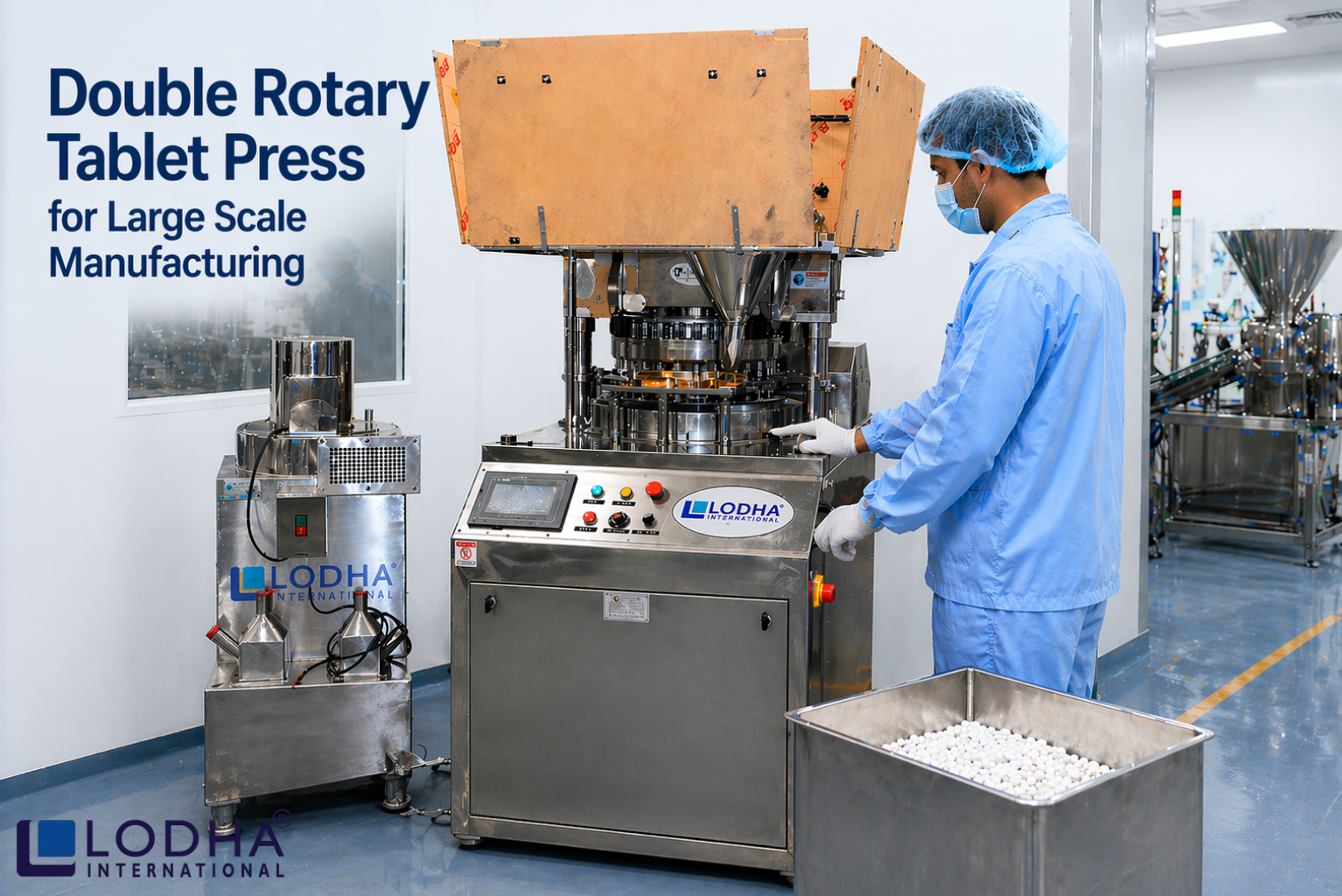
When production demand scales up in pharma manufacturing, the margin for inconsistency shrinks fast. You’re not just making more tablets—you’re expected to maintain uniform weight, hardness, and output speed without interruptions. That’s where a Double Rotary Tablet Press machine manufacturer becomes critical to your operations, not just a supplier.
A double rotary system isn’t simply about speed. It’s about controlled compression, repeatability, and stability under pressure—literally. Whether you’re handling large batches or planning to scale, the right machine directly impacts productivity, compliance, and cost per tablet. In this blog, we’ll break down how these machines work, where they deliver real value, and what buyers should actually look for before making a decision.
What Makes a Double Rotary Tablet Press Different?
A double rotary tablet press works with two sides of compression, allowing simultaneous tablet formation from both upper and lower punches. This design significantly increases output while maintaining consistency across batches.
Unlike single rotary systems, these machines use multiple stations , which means more tablets per rotation cycle. The result? Higher throughput without compromising quality.
What really matters here is the balance—speed alone is useless if tablet weight fluctuates or compression isn’t uniform. The machine’s internal mechanics, such as pressure rollers, cam tracks, and turret alignment, play a major role in maintaining that balance.
How the Compression Process Actually Works
it looks straightforward powder goes in, tablets come out. But inside the machine, it’s a tightly controlled mechanical process.
The powder is fed through a hopper into a feed shoe, which distributes it into die cavities. Then comes pre-compression. This step removes air pockets, which is crucial—skip this and you’ll get weak or inconsistent tablets.
After that, the main compression stage applies the required force using upper and lower punches. The pressure can be adjusted externally, which gives operators better control without disrupting the process.
Finally, the tablet is ejected through a cam system. All of this happens continuously, across multiple stations, at high speed.
It’s not just about automation—it’s about controlled repetition at scale.
Why Large-Scale Manufacturing Depends on It
Let’s be blunt—if you’re producing tablets at scale and still relying on low-capacity machines, you’re bleeding efficiency.
A double rotary tablet press is designed for high-demand environments where:
- Production targets are aggressive
- Downtime is expensiveli
- Consistency is non-negotiable
These machines can produce thousands to millions of tablets per hour, depending on configuration. But more importantly, they maintain uniformity across that volume.
For industries like pharmaceuticals, nutraceuticals, and even chemical processing, this level of control directly impacts product quality and compliance.
Key Features That Actually Matter
Not all machines are built the same. And honestly, most buyers get distracted by specs that don’t translate into real-world performance.
Here’s what actually makes a difference:
1. Pre-Compression + Main Compression System
This dual-stage compression improves tablet density and removes air, reducing defects.
2. Anti-Vibration Structure
Heavy-duty construction with anti-vibration mounts stabilises the machine during high-speed operations.
3. Precision Tooling System
Die, upper punch, and lower punch alignment is critical. Even minor misalignment leads to weight variation.
4. Internal Gear & Drive Mechanism
Helical gear ring and pinion drive allow smooth rotation and consistent positioning of punches.
5. Dust Control & Cleanability
Dust extraction nozzles and stainless-steel components help maintain hygiene and reduce contamination risk.
6. Operator-Friendly Controls
External control panels and digital counters allow easy monitoring and adjustments without stopping production.
These are not “nice-to-have” features. They directly affect uptime, quality, and operational cost.
Common Mistakes Buyers Make (And Pay for Later)
Let’s stress test your thinking here—because this is where most buyers go wrong.
Choosing Based on Price Alone
Cheap machines cost more in the long run—downtime, maintenance, rejected batches.
Ignoring Capacity Planning
Buying a machine that barely meets current demand? That’s a short-term mindset. You’ll outgrow it quickly.
Overlooking Maintenance Access
If cleaning and servicing are difficult, your production slows down. Simple.
Not Checking Material Quality
Low-grade components wear out faster, especially under high pressure and continuous operation.
Assuming All Manufacturers Are Equal
They’re not. Design quality, engineering precision, and after-sales support vary massively.
If you’re not asking the right questions upfront, you’ll end up solving expensive problems later.
Where These Machines Deliver Maximum Value
A double rotary tablet press is not limited to one industry. Its applications are wide, but the value shows most in:
- Pharmaceutical tablet production
- Nutraceutical supplements
- Herbal formulations
- Chemical tablets and catalysts
Any industry where powder compression into uniform tablets is required at scale—this machine becomes a core asset.
Why Choose Lodha International LLP
Lodha International LLPstands out not because of generic claims, but because of how their machines are engineered for real-world manufacturing challenges. Their double rotary tablet press machines combine heavy-duty construction with precision-driven components, allowing stable high-speed production without compromising tablet uniformity. The focus on operator-friendly design, cleanability, and advanced compression systems makes their equipment practical for continuous industrial use. With options like multiple tooling configurations, anti-vibration systems, and customisable features, they cater to both scaling manufacturers and established production units. It’s not just about supplying a machine—it’s about delivering a system that integrates smoothly into demanding production environments.
Conclusion
Scaling tablet production isn’t just about increasing output—it’s about maintaining control while doing it. A double rotary tablet press gives you that balance. It allows higher throughput without sacrificing consistency, which is where many manufacturers struggle. From compression accuracy to machine stability, every detail plays a role in the final product quality.
Choosing the right machine—and more importantly, the right Double Rotary Tablet Press machine manufacturer—can define how efficiently your operations run over the long term. If your current setup is limiting growth or causing inconsistencies, it’s a clear signal to upgrade. The right investment here doesn’t just improve production; it reduces waste, downtime, and operational stress. And in large-scale manufacturing, those gains add up quickly.
Call+919687731331 or email info@lodhapharma.com to discuss your production needs and get the right tablet press solution tailored for your scale.