

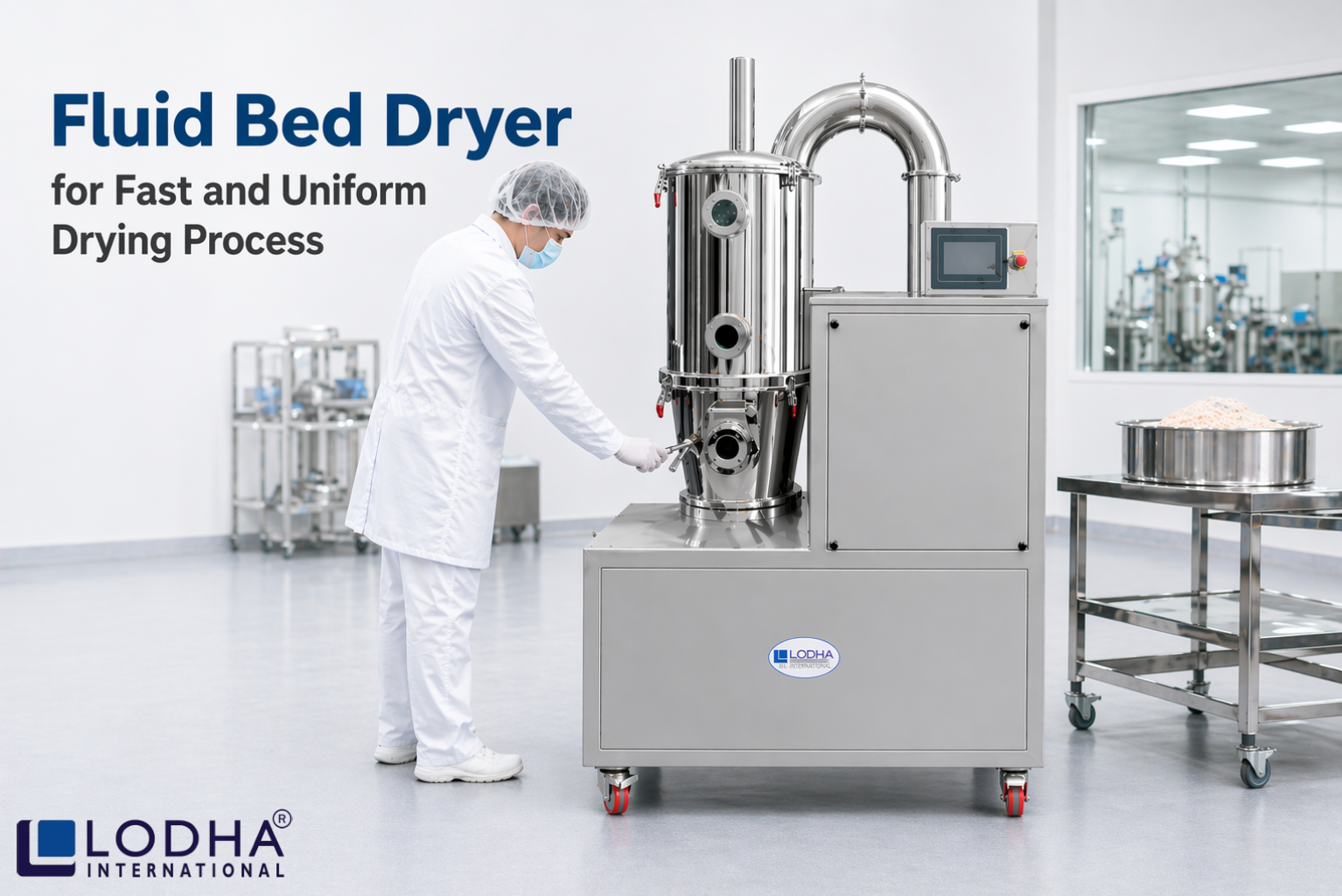
Key Takeaways
- Fluid bed drying ensures uniform moisture removal, improving product consistency and stability
- Simultaneous particle drying significantly reduces processing time and boosts production efficiency
- Ideal for handling heat-sensitive, sticky, and fine materials without clumping issues
- Integrated drying and granulation capabilities reduce equipment dependency and save space
- Choosing the right manufacturer ensures precise control, scalability, and long-term process reliability
Drying sounds simple — remove moisture and move on. But in industries like pharmaceuticals or chemicals, it’s rarely that straightforward. Uneven drying can lead to poor flowability, inconsistent granules, and ultimately, compromised product performance. That’s where the right Fluid Bed Dryer manufacturer in India becomes critical, not just as a supplier, but as a process enabler.
Modern production lines demand speed without sacrificing uniformity. And honestly, traditional drying methods struggle to keep up. This blog breaks down how fluid bed drying actually works, where it creates measurable impact, and what buyers should look for before making a decision — especially in R&D and scale-up environments.
Why Conventional Drying Methods Fall Short
many drying setups still rely on outdated approaches that create more problems than they solve.
Common issues include:
- Uneven moisture distribution across batches
- Overheating or under-drying of materials
- Long processing cycles slowing production
- Difficulty handling sticky or heat-sensitive materials
These aren’t minor inefficiencies. They affect downstream processes like granulation, compression, and coating. A well-designed system from a reliable Fluid Bed Dryer manufacturer in India tackles these challenges at the root level by improving how air and material interact during drying.
How Fluid Bed Drying Actually Works (And Why It’s More Effective)
The concept is straightforward, but execution is where the real difference lies.
Material is placed on a perforated bed, and high-pressure hot air is passed upward through it. This airflow suspends and fluidises the particles, allowing each one to come into direct contact with heated air. Instead of drying layer by layer, the entire batch dries simultaneously.
What makes this process powerful:
- Every particle gets equal exposure to heatxer and chopper
- Moisture removal is faster and more controlledli>
- Suitable for both drying and granulation in one system
In advanced systems, liquid binders can also be atomised into the fluidised bed, creating granules during the drying process itself. That’s a major efficiency gain, especially in pharma and chemical manufacturing.
Where It Delivers Real Value in Production
A fluid bed dryer is not just about faster drying — it changes how your entire process behaves.
1. Uniform Product Quality
Consistent airflow leads to even moisture removal, which improves granule uniformity and stability.
2. Reduced Processing Time
Simultaneous drying of particles cuts down batch cycles significantly compared to tray or oven drying.
3. Better Handling of Complex Materials
Sticky, heat-sensitive, or fine powders can be processed more effectively without clumping.
4. Integrated Drying and Granulation
The ability to combine processes reduces equipment dependency and saves floor space.
When you’re working with a capable Fluid Bed Dryer manufacturer in India, these benefits are not theoretical — they show up directly in production efficiency and product consistency.
Features That Actually Influence Performance
Forget generic feature lists. These are the elements that truly impact your operation.
Advanced Filtration System
High-retention polyester filter cartridges capture fine particles and maintain clean airflow. The compressed air counterblow system cleans filters during operation, which keeps performance stable without stopping the process.
Intelligent Process Control
PLC-based control with a touch screen panel allows operators to adjust parameters precisely. Compatibility with SCADA and 21 CFR Part 11 compliance makes it suitable for regulated environments.
Real-Time Monitoring
- Inlet air temperature probes
- Product temperature sensors
- Inspection windows for visual tracking
- Sample thief for in-process testing
These features give operators control, not guesswork.
Robust Construction
The round tubular main structure improves durability while supporting stable airflow distribution.
Air Treatment Unit
HEPA filtration combined with steam heating allows controlled, clean air supply — essential for pharmaceutical applications.
This is where a serious Fluid Bed Dryer manufacturer in India separates itself from average equipment providers. It’s not about adding features — it’s about integrating them into a reliable system.
Process Operation: What Happens Inside the Machine
Understanding the process helps you evaluate whether the machine fits your needs.
The material is loaded onto a shaking steel bed. As hot air flows upward, it fluidises the particles, creating a dynamic movement that exposes every surface to heat. Moisture begins to evaporate rapidly due to this continuous contact.
As drying progresses:
- Airflow is adjusted to maintain optimal fluidisation
- Moisture levels drop gradually and uniformly
- Sticky or wet materials are handled without clumping
Once the desired dryness is reached, the material enters a cooling phase where cool air replaces hot air. This prepares the product for further processing without thermal stress.
Optional features like vacuum drying systems or heating jackets add another layer of control, especially in sensitive formulations.
Common Buying Mistakes (And Why They Cost You Later)
Let’s stress-test your decision process.
Mistake 1: Ignoring Process Compatibility
Not all dryers handle sticky or fine materials effectively. Choosing the wrong system leads to frequent process interruptions.
Mistake 2: Overlooking Filtration Efficiency
Poor filtration can result in product loss and contamination — both expensive problems in regulated industries.
Mistake 3: Underestimating Control Systems
Manual or limited control setups reduce precision, especially in R&D environments where repeatability matters.
Mistake 4: Skipping Future Scalability
A lab-scale machine that doesn’t align with production requirements creates transition issues later.
A dependable Fluid Bed Dryer manufacturer in India will guide you beyond specs — helping you match the machine to your process, not just your budget.
Why Choose Lodha International LLP
Lodha International LLPbrings a process-focused approach rather than just manufacturing equipment. Their R&D lab fluid bed dryer is designed for businesses where consistency, accuracy, and compliance are crucial on a daily basis. From high-retention filter systems that maintain uninterrupted operation to PLC-driven intelligent controls that align with regulatory frameworks, the design reflects real production challenges. The ability to combine drying and granulation in a single system reduces operational complexity, while features like in-process sampling, temperature monitoring, and easy maintenance make it practical for both lab and scale-up use. What sets them apart is how the machine performs under real working conditions — stable airflow, controlled drying, and adaptability across applications like pharmaceuticals, chemicals, and food processing.
Conclusion
Drying is often treated as a routine step, but in reality, it shapes the quality and consistency of your final product. A well-designed fluid bed dryer transforms this stage from a bottleneck into a controlled, efficient process. From faster drying cycles to better granule structure and reduced operational complexity, the advantages are clear when the system is engineered properly. The key is not just selecting a machine, but choosing one that aligns with your material behaviour, production goals, and regulatory requirements. When those factors come together, you get more than efficiency — you get reliability across batches. If you’re evaluating options, working with the right Fluid Bed Dryer manufacturer in India can make the difference between constant adjustments and a process that simply works.
Call +919687731331 or email info@lodhapharma.com to explore fluid bed drying solutions tailored to your process and production requirements.