

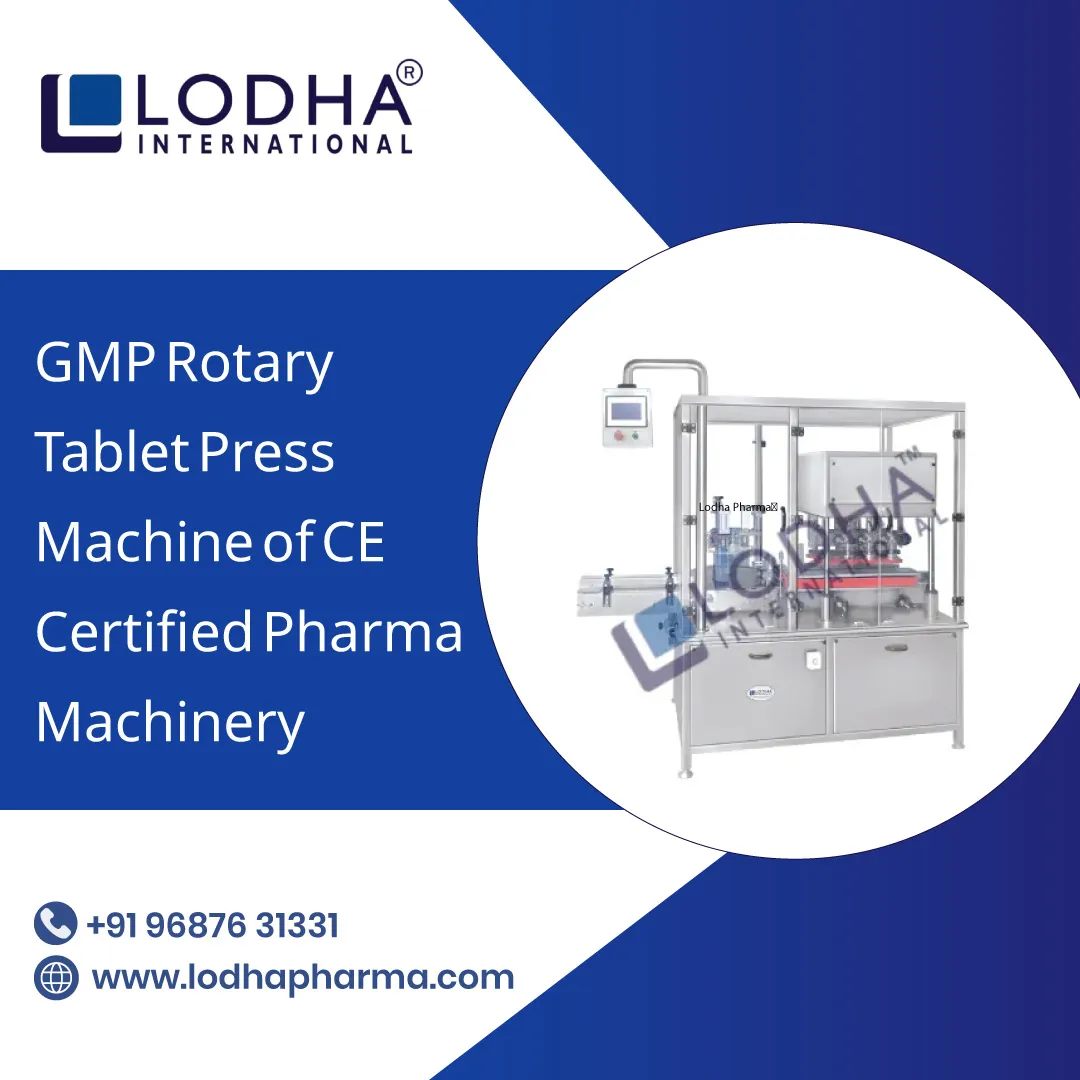
The pharmaceutical industry relies on precision, quality, and consistent output. Every stage of medicine manufacturing must meet regulated standards to ensure safety, efficacy, and reliability. To achieve these standards, pharmaceutical companies require dependable, high-performance machinery that produces tablets with uniform size, weight, and hardness. The GMP Rotary Tablet Press Machine is one of the most important components in modern drug production. It compresses powdered ingredients into solid tablets, delivering high accuracy and efficiency. With CE certification, these machines meet international safety and performance criteria, making them suitable for global manufacturing environments.
High-quality tablet press machines reduce manual work, minimize production errors, and improve overall output. GMP (Good Manufacturing Practices) ensures that machines are built using safe materials, hygienic construction, and controlled processes. CE certification adds a layer of trust, showing compliance with European safety standards. Together, these certifications make GMP Rotary Tablet Press Machines a reliable choice for pharmaceutical, nutraceutical, herbal, cosmetic, veterinary, and chemical industries.
Features of the GMP Rotary Tablet Press Machine
These machines are designed using stainless steel and premium internal components that allow long-term dependable use. The rotary press system uses multiple tooling stations for continuous tablet compression, improving production quantity while maintaining quality.
- Design and Construction: GMP rotary tablet press machines feature a compact, durable, and easy-to-clean design suitable for pharmaceutical environments. Stainless steel contact parts prevent contamination, support hygiene, and withstand continuous operations. The robust build ensures long service life while maintaining consistent tablet quality during high-volume production.
- Key Components and Their Functions: Important components include the feeding system, compression rollers, punches, dies, and rotating turret. These parts work together to ensure uniform filling, precise compression, and accurate tablet thickness. Proper coordination between components maintains consistency in weight, hardness, and tablet shape.
- Automation and Control Systems: Modern machines offer touchscreen interfaces, automatic lubrication, variable speed drives, safety interlocks, and programmable settings. Automation minimizes operator errors, improves product consistency, and enhances production reliability. Digital controls also allow repeatable settings for multiple batch runs.
- Customization Options: Manufacturers provide custom tooling, adjustable output levels, speed controls, dust extraction attachments, and safety enhancements. These options allow machines to meet specific production needs, support different tablet sizes or formulations, and improve overall efficiency in solid-dose manufacturing.
Technical Specification of Single Sided Rotary Tablet Press Machine
| Model No. | LI-MT 8D | LI-MT 10B | LI-MT 10D |
|---|---|---|---|
| Type | Mini Press | Mini Press | Mini Press |
| Number of Station | 8 | 10 | 10 |
| Type of Tooling Punch | D | B | D |
| Output-Tablets /Hr. (Max) | 14,000 | 14,000 | 18,000 |
| Turret RPM (Max) | 30 | 30 | 30 |
| Max. Operating Pressure | 6 Tons | 6 Tons | 6 Tons |
| Max. Tablet Diameter | 22 mm | 16 mm | 22 mm |
| Max. Depth of Fill | 20.5 mm | 17.5 mm | 20.5 mm |
| Upper Punch Penetration | 2 to 6 mm | 2 to 6 mm | 2 to 6 mm |
| Dia. of Die | 38.10 mm | 30.15 mm | 38.10 mm |
| Length of Die | 23.81 mm | 22.22 mm | 23.81 mm |
| Dia. of Punch | 25.34 | 18.99 | 25.34 |
| Length of Punch | 133.65 mm | 133.65 mm | 133.65 mm |
| Power | 2.0 H.P., 1440 RPM, 415 Volts, 50 Hz | ||
| Overall Dimensions (L x W x H) | 480 mm x 670 mm x 1050 mm | ||
| Net Weight (Kgs.) | 375 | ||
| Gross Weight (Kgs.) | 465 | ||
These specifications help buyers evaluate output capacity, tooling type, power needs, and machine size before selection.
Benefits of Using a GMP Rotary Tablet Press Machine
A GMP rotary tablet press machine offers major advantages to pharmaceutical and nutraceutical manufacturers. With multiple compression stations, it supports continuous operation and high-speed tablet production. This improves output while maintaining uniform size, thickness, and hardness for every tablet produced. Consistent compression pressure and accurate weight control help reduce product rejection and enhance quality standards. By automating key processes, the machine lowers labor requirements, reduces handling errors, and minimizes material wastage. This leads to long-term cost savings and smooth production flow. Built according to GMP standards and CE certification criteria, these machines meet strict regulatory guidelines for safety, hygiene, and performance. Choosing a GMP rotary tablet press ensures reliable manufacturing, consistent tablet quality, and full compliance with pharmaceutical industry regulations.
CE Certification: What It Means for Pharmaceutical Machinery
CE certification is a quality standard that shows a machine meets European safety, health, and environmental protection regulations. When pharmaceutical machinery carries a CE marking, it proves that the equipment has passed required tests and follows strict guidelines for safe operation. CE certified machines are approved for sale and installation throughout the European Union without additional inspections or compliance checks. This certification allows global manufacturers to access EU markets more easily and assures users that the machine delivers reliable performance with reduced risks. By choosing CE certified pharmaceutical machinery, companies gain confidence in quality, safety, and international acceptance.
Applications of GMP Rotary Tablet Press Machines
- Pharmaceutical Industry – Produces prescription medicines, over-the-counter tablets, controlled-release formulas, antacids, antibiotics, and pain relief tablets with consistent dosage and hardness.
- Nutraceutical Industry – Manufactures herbal supplements, multivitamin tablets, calcium tablets, energy boosters, and natural health formulations in solid tablet form.
- Ayurvedic & Herbal Industry – Compresses natural powders, botanical extracts, and traditional medicinal blends into easy-to-consume herbal tablets.
- Cosmetic & Personal Care Industry – Suitable for compact powders, beauty tablets, bath tablets, skincare tablets, and specialist cosmetic items that require tablet shape.
- Veterinary & Animal Health Industry – Produces livestock medications, pet supplements, animal nutrition tablets, deworming tablets, and veterinary dosage products.
- Chemical & Speciality Industry – Water purification tablets, detergent tablets, air freshener tablets, cleaning tablets, and other chemical solid-dose applications are made using them.
Maintenance and Care for Rotary Tablet Press Machines
- Routine maintenance practices: Routine cleaning, lubrication of moving parts, and regular inspection of punches and dies ensure smooth operation.
- Troubleshooting common issues: Checking alignment, monitoring powder flow, and replacing worn tooling help avoid machine errors.
- Importance of regular servicing: Professional servicing increases lifespan, prevents breakdowns, and maintains consistent quality performance.
Why Choose Lodha International LLP
When planning to buy Rotary Tablet Press Machines for formulation and development, small production batches, or research needs, selecting trusted technology is essential. Lodha International LLP is a leading Rotary Tablet Powder Press Machine Manufacturer, supplying reliable equipment across India and worldwide. Each GMP Rotary Tablet Press Machine of CE Certified Pharma Machinery is built for durability, accuracy, and long-term performance. Designed as a compact, table-top unit, the Tablet Press Machine GMP Model supports controlled compression, consistent tablet hardness, and precise filling.
These machines follow cGMP construction with stainless-steel contact parts that ensure hygiene and easy cleaning. A GMP Compliant Rotary Tablet Powder Press Machine offers smooth operation, user-friendly controls, and adjustable tooling options. It is suitable for R&D labs, pilot batches, product testing, and small-scale manufacturing in the pharmaceutical, nutraceutical, herbal, veterinary, and cosmetic sectors. With strong engineering, robust build, and efficient output, Lodha International LLP helps companies improve productivity while maintaining regulatory standards.
Conclusion
GMP Rotary Tablet Press Machines improve production quality, reduce operational errors, and ensure tablets meet regulated standards. CE certification enhances credibility and market availability for pharmaceutical manufacturers. Investing in reliable tablet press technology helps companies stay competitive, maintain consistent output, and achieve long-term success.
Now is the right time to explore advanced formulations, upgrade equipment, and improve manufacturing efficiency. For more information about GMP Rotary Tablet Press Machines, +91 9687731331, email – info@lodhapharma.com.