

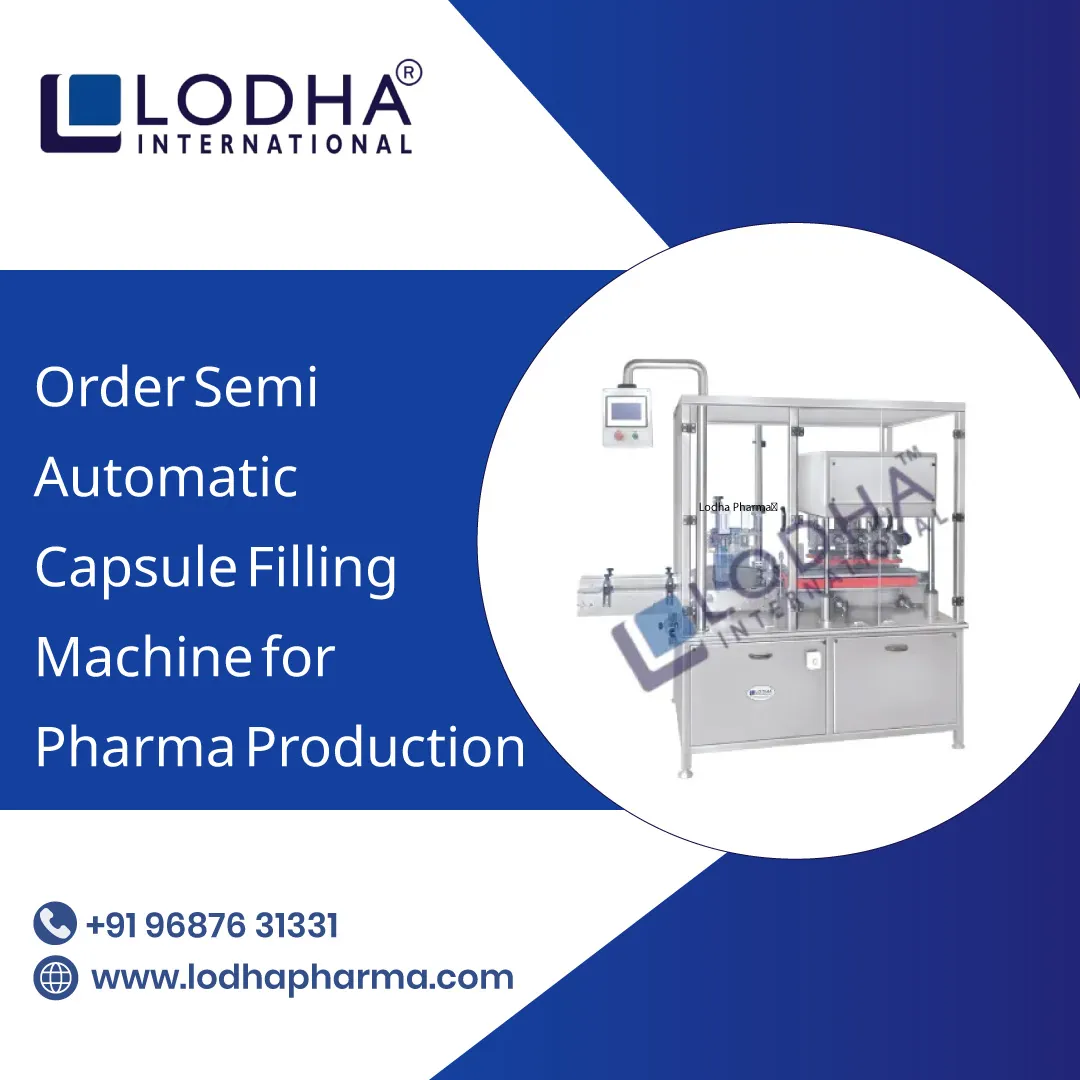
Capsule filling plays a major role in the pharmaceutical industry. Capsules must contain accurate quantities of powder or pellets to meet strict medicine standards. This process demands cleanliness, precise measurement, and consistency. Efficiency and accuracy are vital in pharma production because they directly affect product quality, cost control, and delivery timelines. A GMP semi automatic capsule filling machine of CE Certified Pharmaceutical Machinery offers a strong solution for reliable production. It features an all stainless-steel covering for hygiene and durability. These machines provide high output levels ranging from 25,000 to 47,000 capsules per hour depending on capsule size and operator skill. With a four-speed auger, they handle different powders and pellets smoothly, helping manufacturers improve productivity and reduce waste.
Understanding Semi Automatic Capsule Filling Machines
A semi automatic capsule filling machine is used to separate, fill, and lock capsules in a controlled process. Operators load empty capsules and powder, while the machine manages precise filling to maintain consistent dosage. Unlike manual filling, which is slow and labor-intensive, semi automatic machines improve speed and accuracy. Compared to fully automatic machines, they offer lower investment costs and greater flexibility.
Semi automatic machines are available in two main models — LSCF–35 and LSCF–45. Each model offers different production capacity, material construction, and design features:
- Production Output/hr: LSCF–35 provides up to 35,000 capsules per hour, while LSCF–45 delivers up to 45,000 capsules per hour.
- M.O.C. (Material of Construction): Both models use magnesium alloy loading rings and stainless-steel 316 contact parts for durability and hygiene.
- Number of Rings: LSCF–35 has a single ring; LSCF–45 has a double ring for higher production speed.
- Number of Holes: Size 00 has 480 holes; Size 0 has 600 holes; Size 1–5 have 720 holes for efficient filling.
- Power Supply: Both models require 3-phase, 415V, 50 Hz electricity.
- Compressed Air: Each machine uses 8 CFM for continuous operation.
- Machine Dimensions (in mm): LSCF–35 measures 1950 × 1200 × 1800. LSCF–45 measures 2650 × 1250 × 1800.
- Net Weight (in kg): LSCF–35 weighs 1100 kg; LSCF–45 weighs 1250 kg.
Benefits of Using Semi Automatic Capsule Filling Machines
Semi automatic machines offer multiple advantages for pharmaceutical companies. They are cost-effective for small to medium production batches, helping new and growing pharma businesses manage budgets. Their modular design allows easy adjustment of production volumes as demand increases. Enhanced control systems ensure consistent filling accuracy, reducing human error and maintaining stable dosage levels. These machines also lower labor costs because only one or two trained operators are required.
Key Considerations When Buying a Semi Automatic Capsule Filling Machine
When selecting the right machine, consider production capacity, speed, and the capsule sizes you need to fill. Compatibility with different capsule types ensures flexibility during production. Ease of cleaning and maintenance is another important factor, as it helps maintain hygiene and reduces downtime. Evaluate user-friendly operation because trained workers should be able to control machine functions efficiently.
Technical specifications are essential when comparing machines:
- Production Output / hr: Up to 35,000 (LSCF–35) and up to 45,000 (LSCF–45). Production output determines how many capsules can be filled per hour, helping match daily batch requirements and improving overall productivity for pharmaceutical operations.
- Materials of Contact Parts: Magnesium Alloy and Stainless Steel 316. Contact parts made from magnesium alloy and stainless steel 316 ensure hygiene, corrosion resistance, and durability during continuous capsule filling.
- Number of Rings: Single (LSCF–35) and Double (LSCF–45). The number of rings affects speed and consistency. Single rings suit smaller batches, while double rings deliver better capacity for growing production needs.
- Power and Air Requirements: 3 Phase 415 Volts with 8 CFM compressed air. Machines require stable 3-phase electricity and compressed air for smooth capsule separation, accurate filling, and efficient locking during operation.
- Dimension and Weight: Larger models provide bigger capacity but require more space. Machine size and weight impact installation planning. Larger units offer higher output but need suitable floor space and handling during setup.
Cost of Semi Automatic Capsule Filling Machine in India
The Semi Automatic Capsule Filling Machine price in India depends on several key factors including model size, output capacity, construction materials, and advanced features. When comparing machines, it is important to remember that the cost involves more than just the initial purchase amount. Long-term savings come from improved filling accuracy, reduced product rejection, and lower labor requirements. Machines made with stainless steel and GMP-compliant components may cost more upfront, but they offer better durability and hygiene for pharmaceutical production.
Budget planning should include expenses for operator training, routine maintenance, spare parts, and service support. Reliable machines with easy-to-clean surfaces and user-friendly designs help reduce downtime, minimize repair costs, and improve overall efficiency. Considering these factors helps determine true long-term value rather than focusing only on purchase price. Proper budgeting ensures predictable investment returns and controlled production costs while maintaining consistent capsule quality.
Why Choose Lodha International LLP
When planning to buy a semi automatic capsule filling machine for pharma production, selecting a trusted and experienced partner is essential. Lodha International LLP is the leading manufacturer of semi automatic capsule filling machines in India and supplies machinery worldwide. Each GMP semi automatic capsule filling machine is built to meet CE Certified Pharmaceutical Machinery standards, ensuring quality, performance, and safety. The all stainless-steel covering supports hygiene, easy cleaning, and long-term durability in demanding production environments.
These machines deliver high output ranging from 25,000 to 47,000 capsules per hour, depending on capsule size and operator skill. This helps manufacturers meet production targets efficiently and consistently. A four-speed auger system allows the machine to handle different powders and pellets smoothly, reducing wastage and improving filling accuracy. With reliable construction, user-friendly controls, and strong after-sales support, Lodha International LLP provides solutions that improve productivity, reduce labor, and maintain quality across every batch.
Conclusion
Choosing the right capsule filling machine can improve efficiency, reduce production time, and maintain high product quality. Assess production needs, compare machine models, and consider after-sales service for long-term success. Semi automatic capsule filling machines provide reliable accuracy, flexible capacity, and excellent value for pharmaceutical manufacturing.
Investing in quality machinery supports business growth and compliance with pharma standards. For more information or planning to buy semi automatic capsule filling machine for pharma production, +91 9687731331, email – info@lodhapharma.com.