

Key Takeaways
- Precision dosing is the foundation of reliable pharmaceutical powder packaging.
- Choosing between automatic and semi-automatic systems depends largely on production scale.
- Machine compatibility with powder characteristics directly affects performance.
- Integration capability is essential for modern high-speed packaging lines.
- Partnering with an experienced manufacturer reduces long-term operational risks.
When precision matters, pharmaceutical packaging leaves no room for guesswork. A slight variation in dosage, a minor inconsistency in filling, or even a small delay in production can create serious downstream problems. That’s exactly why modern manufacturers are turning toward advanced filling technology that delivers both accuracy and speed without complicating operations.
In pharmaceutical environments where sterility, consistency, and compliance sit at the centre of every process, choosing the right powder filling machine becomes a strategic decision, not just a technical one. Whether you are scaling production or refining an existing line, understanding how these machines work — and which configuration fits best — can quietly transform your packaging efficiency.
Understanding the Role of Powder Filling in Pharmaceutical Packaging
Pharmaceutical powders behave very differently from liquids. Flow characteristics vary. Density shifts between batches. Some powders are free flowing; others are sticky or aerated. Because of this, pharma powder filling demands specialised equipment that can maintain dosing accuracy while protecting product integrity. A well-designed powder dosing machine handles these challenges by delivering controlled, repeatable fills into vials, bottles, or containers. The goal is simple on paper but complex in execution: every container must receive the correct quantity, every single time.
Manufacturers across injectable, dry syrup, chemical, cosmetic, and nutraceutical segments rely heavily on high-performance filling systems to maintain production reliability. This is where companies like Lodha International LLP have built a strong reputation by offering machines designed for real industrial demands rather than theoretical performance.
How a Powder Filling Machine Works
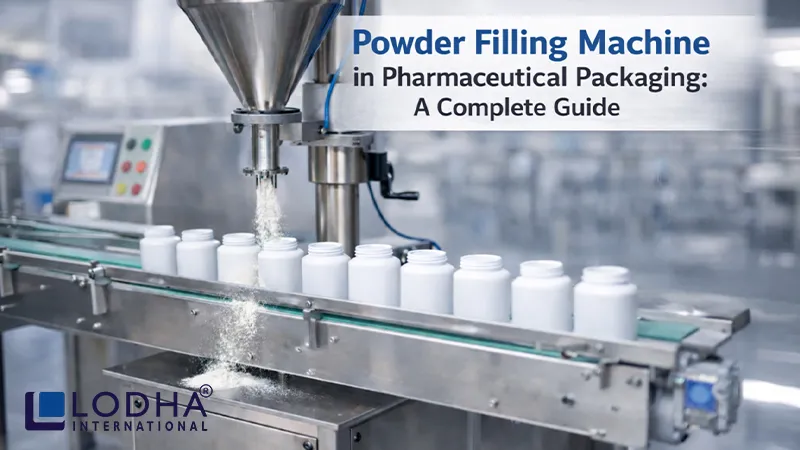
At its core, a powder filling machine uses an auger or volumetric mechanism to dispense precise amounts of powder into containers. The process might sound straightforward, but the engineering behind it is carefully tuned for pharmaceutical precision. Most modern systems follow a sequence like this:
- Container feeding and positioning
- Controlled powder dosing
- Filling through auger mechanism
- Optional rubber stoppering or sealing
- Discharge for further packaging
The powder dosing machine plays the central role here. It regulates the amount of material released per cycle, maintaining uniformity across thousands of fills. In high-speed pharmaceutical lines, the integration between dosing accuracy and mechanical stability is what separates average equipment from truly production-ready solutions.
Types of Powder Filling Machines Used in Pharma
Not every facility needs the same level of automation. Production scale, budget, and product sensitivity all influence the right choice. Broadly, pharmaceutical manufacturers evaluate three major configurations.
Automatic Systems for High-Volume Production
An automatic powder filler is designed for continuous, high-speed environments where manual intervention must stay minimal. These machines typically integrate with upstream and downstream equipment, creating a smooth packaging flow. Key characteristics include:
- High output capacity
- Consistent dosing accuracy
- Reduced operator dependency
- Better suitability for large pharmaceutical plants
For injectable powder lines or dry syrup production, an automatic powder filler often becomes the backbone of the packaging section.
Semi-Automatic Solutions for Flexible Operations
Not every production environment runs at massive scale. Smaller batches, R&D labs, or mid-size manufacturers often prefer the flexibility of a semi-automatic powder filler. This configuration offers:
- Lower initial investment
- Operator control during filling
- Suitable for moderate production volumes
- Easier changeover between products
A semi-automatic powder filler works especially well where batch sizes vary frequently or where product changeovers happen often.
Industrial Machines for Heavy-Duty Applications
When powder handling moves beyond pharmaceuticals into chemicals, agriculture, or bulk materials, an industrial powder filler becomes relevant. These machines are built with rugged construction and higher material handling capacity. Still, many pharmaceutical companies also evaluate an industrial powder filler when dealing with abrasive or difficult powders that require stronger mechanical systems.
Product Range Offered by Lodha International LLP
Manufacturers looking for versatility often explore the portfolio available from Lodha International LLP. Their range covers multiple pharmaceutical requirements, including:
- Automatic vial powder filling machines
- Rotary dry syrup powder filling and rubber stoppering machines
- Injectable powder filling with rubber stoppering
- High-speed powder filling machines
- Semi-automatic injectable powder filling machines
What stands out is the adaptability. These machines are designed to handle bottles and vials of different shapes, sizes, and materials without compromising filling consistency. Across pharmaceutical, chemical, cosmetic, agriculture, and food sectors, Lodha International LLP has positioned its equipment to support real production environments rather than one-size-fits-all setups.
Key Technical Factors Buyers Should Evaluate
Selecting the right powder filling machine is not just about capacity. Experienced buyers typically look deeper into performance variables that influence long-term reliability.
- Dosing Accuracy and Repeatability: The heart of pharma powder filling lies in consistent dosing. Even small deviations can create compliance issues. A high-quality powder dosing machine should maintain tight tolerance across extended production runs.
- Machine Speed vs Product Behaviour: Not all powders flow the same way. Free-flowing powders perform well at higher speeds, while cohesive powders may require slower, more controlled filling cycles. Matching machine speed with powder characteristics is critical.
- Changeover Flexibility: Facilities producing multiple SKUs benefit from machines that allow quick format changes. Both automatic powder filler and semi-automatic powder filler models should support efficient cleaning and adjustment.
- Integration Capability: Modern pharmaceutical plants rarely operate standalone equipment. The industrial powder filler or pharmaceutical unit should integrate smoothly with conveyors, capping systems, and inspection units.
Automatic vs Semi-Automatic: Which One Fits Better?
Choosing between an automatic powder filler and a semi-automatic powder filler often comes down to production strategy rather than just budget.
| Factor | Automatic Powder Filler | Semi-Automatic Powder Filler |
|---|---|---|
| Production volume | High | Medium to low |
| Operator involvement | Minimal | Moderate |
| Initial investment | Higher | Lower |
| Flexibility | Moderate | High |
| Best suited for | Large pharma plants | Small to mid-manufacturers |
Many growing companies start with a semi-automatic powder filler and later upgrade to a fully automatic powder filler as demand increases.
Applications Across Pharmaceutical and Allied Industries
While the focus remains on pharma powder filling, these machines quietly support a wide range of industries. Their versatility makes them valuable across multiple product categories. Common applications include:
- Injectable powder filling
- Dry syrup packaging
- Cosmetic powder products
- Chemical powder filling
In high-volume environments, an industrial powder filler becomes particularly useful where durability and continuous operation matter more than compact size.
Why Precision Engineering Matters More Than Ever
Regulatory expectations in pharmaceutical manufacturing continue to tighten. Documentation, batch consistency, and contamination control are under constant scrutiny. In this environment, the performance of the powder dosing machine directly affects compliance confidence. A poorly calibrated powder filling machine can create:
- Weight variation issues
- Product wastage
- Rework and downtime
- Regulatory observations
On the other hand, a well-built automatic powder filler or semi-automatic powder filler quietly stabilises the entire packaging workflow. That operational stability is often what serious manufacturers are really investing in.
Why Choose us
At Lodha International LLP, the focus has always stayed on practical performance rather than surface-level specifications. Every powder filling machine is developed with real pharmaceutical production challenges in mind — from dosing consistency to mechanical reliability. Clients working with Lodha International LLP value the balanced approach: robust engineering, adaptable machine configurations, and dependable after-sales support. Instead of pushing a single standard model, the team understands that each pharma powder filling requirement is slightly different. That mindset helps manufacturers select equipment that fits their process today while still supporting future scale without unnecessary complexity.
Conclusion
Choosing the right powder filling solution can quietly shape the efficiency, compliance, and scalability of a pharmaceutical packaging line. From understanding powder behaviour to selecting between an automatic powder filler and a semi-automatic powder filler, every decision plays a role in long-term performance. A reliable powder dosing machine not only improves accuracy but also strengthens production confidence across batches. Manufacturers evaluating modern pharma powder filling systems should focus on precision, flexibility, and integration readiness. With the right industrial powder filler in place, operations become smoother, wastage drops, and packaging consistency improves — exactly what growing pharmaceutical businesses need.
Explore advanced Powder Filling Machine solutions with Lodha International LLP. Call +919687731331 or email info@lodhapharma.com to discuss your pharmaceutical packaging requirements today.