

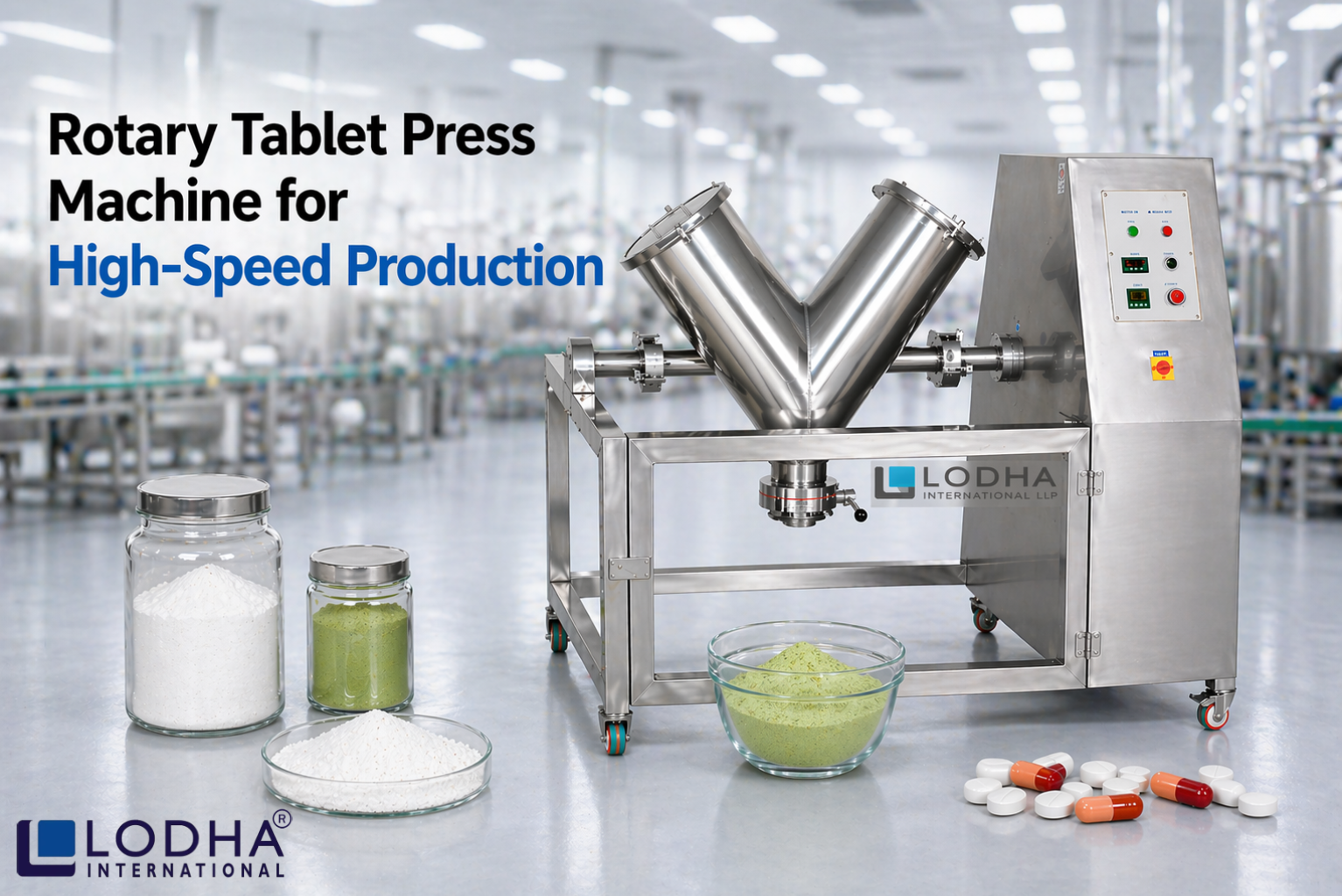
Key Takeaways
- Rotary tablet press machines enable high-speed, continuous production while maintaining tablet uniformity
- Precision compression control and stable turret design ensure consistent tablet weight and hardness
- Machine performance depends on powder flow, tooling quality, and overall system integration
- Different machine types suit different production scales, from R&D to high-volume manufacturing
- Choosing the right manufacturer ensures long-term efficiency, reduced downtime, and scalable production
When tablet production starts scaling, the real pressure isn’t just volume — it’s consistency at speed. You can produce thousands of tablets per hour, but if weight variation, hardness issues, or downtime creep in, output numbers stop meaning much. That’s exactly were choosing the right Rotary Tablet Press Machine manufacturer in India becomes a critical business decision, not just a technical one.
High-speed production demands machines that can handle continuous compression without compromising uniformity. In this blog, we’ll break down how rotary tablet press machines actually impact production efficiency, what separates a reliable system from an average one, and how to evaluate the right setup for your operation.
Why Tablet Compression Slows Down at Large Scale
most production issues don’t show up during small batches. They appear when speed increases.
Common problems include:
- Inconsistent tablet weight at high RPM
- Frequent machine stoppages due to overheating or wear
- Poor powder flow leading to uneven filling
- Increased rejection rates under continuous operation
This is where basic or outdated machines fail. A well-engineered system from a dependable Rotary Tablet Press Machine manufacturer in india is designed to handle these pressures without constant manual intervention.
How a Rotary Tablet Press Machine Works in Real Production
At a glance, the process seems simple — fill, compress, eject. But at high speed, precision becomes everything.
The rotary tablet press uses multiple tooling stations (dies and punches) mounted on a rotating turret. As the turret spins:
- Powder fills into dies through a feed systemper
- Upper and lower punches compress the material into tablets
- Finished tablets are ejected continuously
What makes it powerful is simultaneous operation. Multiple tablets are produced in one rotation, which dramatically increases output.
Key advantages:
- Continuous production without interruption
- High output per hour
- Better uniformity with controlled compression forces
A capable Rotary Tablet Press Machine manufacturer in india focuses on stability during this rotation — because that’s where most inconsistencies originate.
Types of Rotary Tablet Press Machines (And When to Use Them)
Not all machines are built for the same purpose. Choosing the wrong type can limit your efficiency.
Single Sided Rotary Tablet Press Machine
Ideal for moderate production volumes. Small and simple to use, it is frequently utilized in R&D settings or smaller facilities.
Double Sided Rotary Tablet Press Machine
Designed for higher output, with compression happening on both sides of the turret. Suitable for large-scale manufacturing where throughput matters.
High Speed Rotary Tablet Press Machine
Built for continuous, high-volume production with minimal downtime. These machines are engineered to maintain precision even at high RPM.
Mini Rotary Tablet Press Machine
Best suited for laboratory testing, pilot batches, or small-scale production runs.
Each type serves a specific need. The mistake is assuming “high speed” is always the right answer — it only works if your upstream and downstream processes can keep up.
Where It Fits in the Complete Tablet Production Line
A tablet press doesn’t operate in isolation. It’s part of a larger ecosystem.
Upstream processes include:
- Mixing (Mass Mixer, Ribbon Blender)
- Granulation (Rapid Mixer Granulator)
- Drying (Fluid Bed Dryer)
- Milling (Multi Mill)
Downstream processes include:
- Dedusting (Tablet De Duster)
- Coating (Automatic Tablet Coater)
- Inspection and counting
If your upstream granulation is inconsistent, even the best tablet press won’t fix it. A reliable Rotary Tablet Press Machine manufacturer in india understands this integration and designs machines that work seamlessly within the full production flow.
What Actually Determines Machine Performance
Forget surface-level specs. These are the factors that impact real-world output.
Compression Control
Accurate force control prevents tablet defects like capping or lamination.
Turret Stability
A stable turret reduces vibration, which directly affects tablet weight consistency.
Tooling Precision
High-quality dies and punches maintain uniform shape and density across batches.
Powder Feeding System
Consistent die filling is critical, especially at high speeds.
Build Quality
Durable materials reduce wear and support continuous operation without frequent maintenance interruptions.
This is where an experienced Rotary Tablet Press Machine manufacturer in india makes a difference — by engineering machines that hold performance under pressure, not just in ideal conditions.
Common Buying Mistakes That Hurt Production
Let’s stress-test your buying decision.
Mistake 1: Overestimating Required Speed
Buying a high-speed machine without matching upstream capacity leads to inefficiencies and idle time.
Mistake 2: Ignoring Tooling Compatibility
Poor-quality or incompatible dies and punches can reduce tablet quality regardless of machine capability.
Mistake 3: Choosing Based on Initial Cost
Lower-cost machines often lead to higher long-term expenses due to maintenance and rejection rates.
Mistake 4: Overlooking Integration
If the machine doesn’t align with your granulation and drying processes, you’ll face constant adjustments.
A serious Rotary Tablet Press Machine manufacturer in india helps you avoid these traps by aligning machine selection with your entire production strategy.
Why Choose Lodha International LLP
Lodha International LLPapproaches tablet manufacturing as a complete process, not just a single machine sale. Their rotary tablet press machines are part of a broader ecosystem that includes granulation, drying, blending, and finishing equipment — all designed to work together. This integrated approach reduces compatibility issues and improves overall production flow.
The machines are built with durable materials and engineered for continuous operation, making them suitable for high-demand pharmaceutical and powder processing industries. With options ranging from single-sided to high-speed rotary presses, they cater to both R&D setups and large-scale manufacturing. What stands out is their understanding of real production challenges — from powder behaviour to machine stability — which reflects in how their equipment performs during long, high-speed runs.
Conclusion
Scaling tablet production isn’t just about increasing speed — it’s about maintaining control as volume grows. A rotary tablet press machine plays a central role in that balance, directly influencing tablet consistency, production efficiency, and overall operational cost. The key is choosing a machine that fits your process, not just your output targets. When compression control, turret stability, and system integration come together, production becomes smoother and more predictable. On the other hand, the wrong choice leads to constant adjustments, higher rejection rates, and unnecessary downtime. If you’re planning to upgrade or invest in new equipment, working with the right Rotary Tablet Press Machine manufacturer in India can define how efficiently your production scales in the long run.
Call +919687731331 or email info@lodhapharma.com to discuss your tablet production requirements and find the right rotary tablet press solution for your setup.