

Key Takeaways
- Understanding product viscosity is crucial for selecting the right chemical machinery.
- Lodha International LLP specializes as a top chemical machinery manufacturer in India for high-viscosity applications.
- Choosing the correct discharge method can impact product handling and processing efficiency.
- Temperature control is vital; jacketed Sigma Mixers allow precise heating or cooling during operations.
- Evaluate safety features and material construction for effective chemical machinery selection.
Lodha International LLP is a leading manufacturer of chemical machinery for pharmaceutical, cosmetic and process industries.
Selecting chemical machinery requires more than checking batch capacity. Product viscosity, mixing action, heating or cooling needs, discharge method, material of construction and safety requirements all affect machine suitability.
As a Chemical Machinery Manufacturer in India, we focus on application-based equipment selection for high-viscosity and process-intensive products.
What Type of Chemical Machinery Does the Application Need?
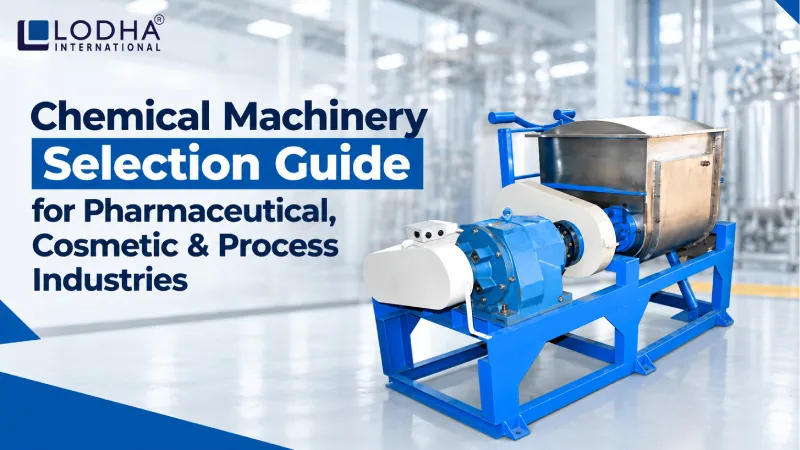
Among the various machines in our chemical processing equipment range, the Sigma Mixer, commonly referred to as a kneader, plays a vital role in handling and processing high-viscosity materials.
A Sigma Mixer uses two Z-shaped blades rotating in opposite directions at different speeds. This creates a combination of shearing, stretching, folding, dividing and recombining actions, making the machine suitable for products that are too thick for conventional low-shear mixing systems.
The first selection question should be the product’s viscosity and mixing behaviour, not only the required batch size.
How a Sigma Mixer Handles High-Viscosity Products
The material is loaded from the top into the mixing trough. During operation, the two heavy-duty blades work the product continuously between the blades and the trough walls.
Depending on the process requirement, mixing may take place at ambient temperature or under controlled heating or cooling. Jacketed troughs can be supplied for circulating suitable hot or cold media during processing.
This makes the Sigma Mixer suitable for demanding products such as adhesives, pastes, polymers, rubber compounds, inks, pigments, pharmaceuticals, soaps, detergents and other highly viscous formulations.
Which Factors Should You Compare Before Selection?
Different chemical-processing applications need different machine configurations. The main comparison points are below.
| Selection Factor | Why It Matters | Available Consideration |
|---|---|---|
| Product viscosity | Determines required mixing force | Heavy-duty Z-blade kneading |
| Batch capacity | Affects production volume | Multiple capacity options |
| Temperature control | Needed for heating or cooling | Jacketed shell available |
| Discharge method | Impacts product handling | Tilting, bottom discharge or screw/extruder |
| Material construction | Depends on product and hygiene needs | Mild steel or stainless steel |
| Process environment | May require special electrical design | Flame-proof or non-flame-proof options |
As a Chemical Machinery Manufacturer in India, we recommend finalizing these parameters before deciding the machine configuration.
Capacity and Scale of Production
Lodha's Sigma Mixer range is available from small production capacities up to larger industrial batch requirements. The current Sigma Mixer information lists capacities from 3 litres to 2000 litres.
Capacity selection should be based on actual working volume rather than the nominal size alone. Product density, viscosity, loading percentage and process behaviour can all influence usable batch volume.
For research, development, and pilot-scale applications, specially designed laboratory Sigma Mixers are available with smaller working capacities of 5, 10, and 20 litres.
Heating, Cooling and Jacket Requirements
Certain formulations used in the pharmaceutical, cosmetic, and chemical industries require precise temperature regulation throughout the mixing process.
A jacketed Sigma Mixer can circulate steam, oil, water or another suitable medium for heating or cooling, depending on the approved machine configuration. Insulation can also be provided around the jacket where required.
This is useful when the process involves melting, temperature-sensitive blending, controlled kneading or maintaining a specific product consistency during mixing.
Choosing the Right Discharge Arrangement
Highly viscous material can be difficult to discharge, so the outlet design should match the product.
Typical discharge options include:
- Tilting discharge: The vessel is tilted manually, mechanically or hydraulically.
- Bottom discharge: Suitable for products that can flow through a valve or gate.
- Extruder or screw discharge: Useful when thick material must be transferred directly for further processing.
The selected discharge system should match product viscosity, operator handling needs and downstream process requirements.
Construction and Safety Features
Chemical machinery often handles demanding formulations, so mechanical construction and operator protection are important.
Relevant Sigma Mixer features include:
- Mild steel or stainless-steel trough and blade construction
- Smooth product-contact surfaces
- Heavy-duty gears
- PTFE or Teflon-based shaft sealing
- Guards and grills
- Safety interlocking
- Optional vacuum or pressure operation
- Flame-proof or non-flame-proof electrical arrangements.
These features should be selected according to the product, process environment and final project scope.
Applications Across Pharmaceutical, Cosmetic and Process Industries
Sigma Mixers are used where thick, sticky or dough-like materials require intensive kneading.
Typical applications include pharmaceuticals, creams, gels, pastes, adhesives, pigments, inks, polymers, rubber compounds, putties, soaps, detergents, food products and other viscous formulations.
For pharmaceutical and cosmetic applications, machine material, cleaning access and control requirements should be finalized according to the approved production process rather than assumed from a general chemical setup.
Buyer Checklist Before Finalizing Chemical Machinery
Before approaching a Chemical Machinery Manufacturer in India, B2B buyers should prepare the key process information.
- Product name and viscosity
- Required working batch size
- Heating or cooling requirement
- Preferred material of construction
- Discharge method
- Vacuum or pressure requirement
- Flame-proof requirement, if applicable
Having these details available helps our team recommend a configuration that fits the actual process instead of selecting equipment only by capacity.
Why Choose Us
At Lodha International LLP, we focus on practical machine selection for pharmaceutical, cosmetic and chemical-processing applications. Our Sigma Mixer configurations can be supplied with different capacities, discharge arrangements, jacket options, materials and electrical systems according to the project requirement. As a Chemical Machinery Manufacturer in India, we work with customers to understand product viscosity, batch size, temperature control and material-handling needs before finalizing the suitable machine configuration.
Conclusion
Selecting suitable chemical processing equipment requires a thorough understanding of the material’s behaviour under different processing conditions. High-viscosity materials need the correct mixing action, sufficient mechanical strength, suitable temperature control and an appropriate discharge method. Sigma Mixers are designed for intensive mixing and kneading where standard agitators may not be suitable.
Lodha International LLP offers configurable Sigma Mixer solutions for pharmaceutical, cosmetic, chemical and other process applications. Working with a Chemical Machinery Manufacturer in India helps buyers evaluate the complete process requirement before selecting the machine.
Need chemical machinery for a high-viscosity pharmaceutical, cosmetic or process application? Contact Lodha International LLP to discuss your product viscosity, batch size, heating or cooling needs and discharge requirements.
Phone: +91-7435031331
Email: info@lodhapharma.com
FAQs
Chemical Machinery Sigma Mixer Chemical Mixing Machine Pharmaceutical Machinery Cosmetic Machinery Process Equipment High Viscosity Mixer Kneader Machine Industrial Mixing Equipment Chemical Processing Machinery